Plant Stand Weight Capacity: A Guide to Not Destroying Your Floors
I still remember the sound. It was a wet Tuesday evening, and I was making dinner when I heard a sharp crack from the living room, followed by a thud that vibrated through the floorboards. My beautiful four-tier bamboo plant stand, the one I had loaded with six ceramic pots full of moist soil, had given up. The second shelf had snapped clean through, sending two pots of succulents and a mature snake plant crashing onto my hardwood floor. The ceramic pot survived. The floor did not. I spent the next month looking at a quarter-inch gouge every time I walked past that spot, and another fifty dollars on wood filler and refinishing supplies.
Plant stand weight capacity is not a suggestion. It is a structural limit, and exceeding it has real consequences. The problem is that most people, myself included, have no idea how much their potted plants actually weigh. We think in terms of plant size and pot beauty, not physics. But pots full of wet soil are heavy, and stands have limits. Learning those numbers changed how I buy, load, and arrange every plant stand in my home.
How Much Does a Potted Plant Actually Weigh?
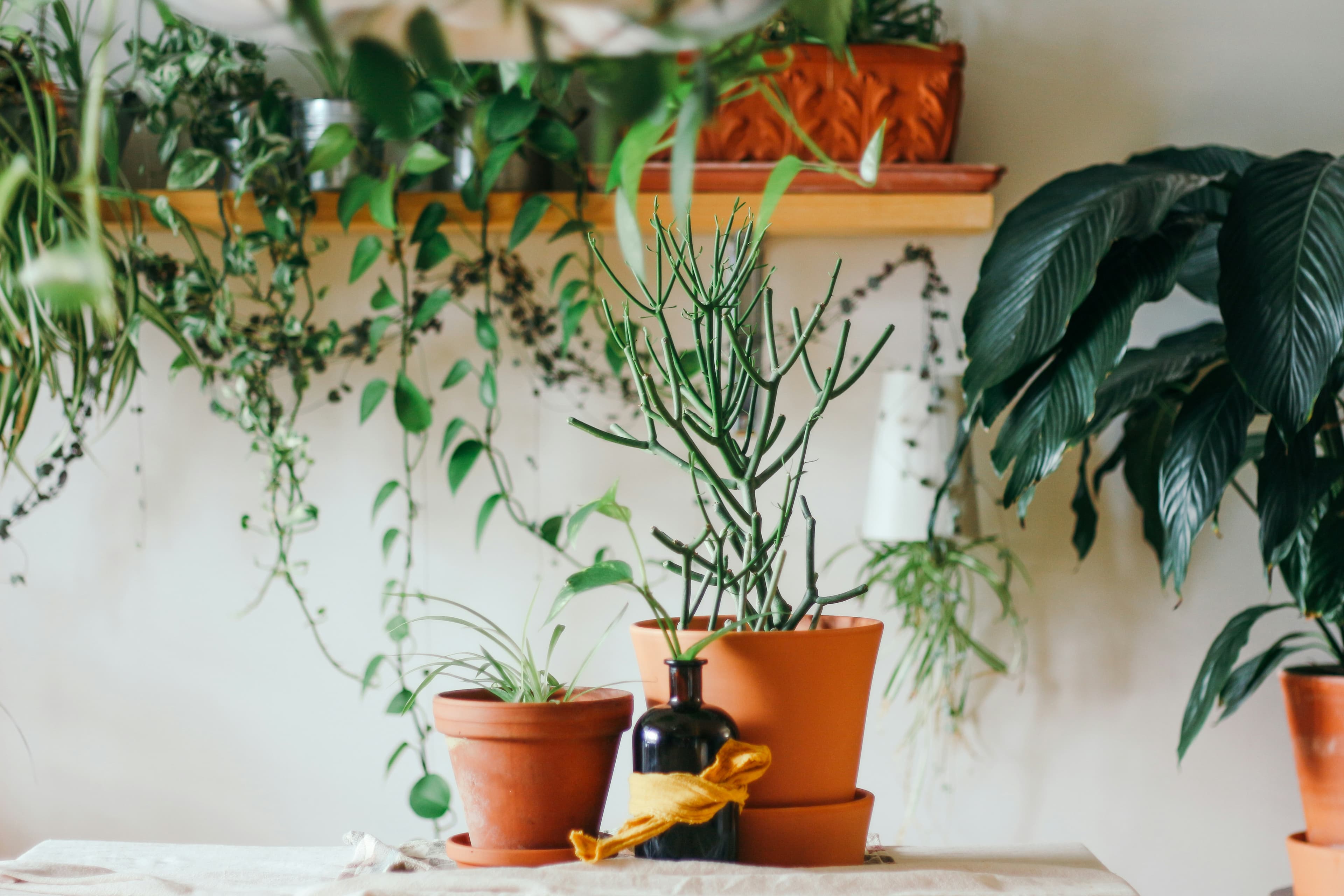
This is the calculation that changed everything for me. A standard six-inch terracotta pot weighs about two pounds empty. Fill it with dry potting soil, and it gains another four to five pounds. Water that soil thoroughly, and you add two to three more pounds. So a small six-inch terracotta pot with a happy, well-watered plant weighs eight to ten pounds. That is more than a bag of sugar, and most people would guess three pounds at most.
Scale up, and the numbers get scary fast. A ten-inch ceramic pot with moist soil weighs twenty to twenty-five pounds. A twelve-inch concrete planter can hit forty pounds. My fiddle leaf fig, in a fourteen-inch ceramic pot with fully moist soil, weighs just under sixty pounds. I know because I weighed it on a bathroom scale out of curiosity, and I wish I had done that math before I bought the stand it sits on. It is now on a dedicated plant dolly because no tiered stand I own can safely handle that load.
The material of the pot matters enormously. Plastic weighs almost nothing. A ten-inch plastic pot with soil might weigh twelve pounds. The same volume in terracotta hits twenty. Concrete or stone adds massive weight. If you love the look of heavy ceramic and concrete pots, which many of us do, you need stands rated for serious loads. Lightweight stands are fine for plastic nursery pots, but they are dangerous with premium ceramics.
Reading Weight Ratings Honestly
Manufacturers list weight capacity, but the number is not always what it seems. Some stands list total capacity, meaning the sum of all shelves combined. Others list per-shelf capacity. A three-tier stand rated for forty-five pounds might mean fifteen pounds per shelf, not forty-five on the top shelf. I have learned to check the fine print or contact the seller if it is not obvious. When in doubt, assume per-shelf rating.
Even when the rating is clear, I treat it as a maximum under ideal conditions. A stand rated for twenty pounds per shelf might handle twenty pounds of evenly distributed weight in a climate-controlled room. Add a top-heavy pot, humidity that softens wood grain, or a shelf that bows slightly over time, and that twenty-pound rating becomes optimistic. My personal rule is to stay under seventy-five percent of the stated capacity. If a shelf is rated for twenty pounds, I aim for fifteen or less. If it is rated for fifty, I stop at thirty-seven.
For tiered stands, the bottom shelf can usually handle more weight than the top. Physics works in your favor when the heavy stuff is low. I always put my heaviest pots on the lowest shelf, medium weights in the middle, and lightweight plants or empty decorative items on top. This not only protects the stand but also reduces tipping risk. A top-heavy stand is an accident waiting to happen, especially on carpet where the feet might not grip well.
Matching Stands to Heavy Plants
If you own large plants in heavy pots, you need industrial-grade stands. Look for solid wood construction with thick shelves, at least three-quarters of an inch, or metal frames with reinforced welds. Avoid anything with particle board, thin veneer, or snap-together plastic joints. Those are fine for four-inch succulents. They are not fine for a twelve-inch ceramic pot that weighs as much as a toddler.
For truly heavy specimens, consider a plant caddy or dolly instead of a traditional stand. A heavy-duty plant caddy with steel wheels can support two hundred pounds or more. It keeps the pot close to the ground, which is safest, and lets you move it for cleaning or seasonal light adjustments. I have my largest indoor plant, a sixty-pound monstera, on a wooden plant dolly that cost thirty dollars. It is not glamorous, but it is rock solid, and I can roll it to the shower for a leaf rinse.
Floor protection matters too, especially for renters. A heavy stand with narrow legs concentrates enormous pressure on small points. A fifty-pound stand on four quarter-inch legs exerts pressure that can dent wood, crack tile, or leave permanent marks on vinyl. Use felt pads, rubber coasters, or a small rug under heavy stands. After my floor incident, I put furniture sliders under every stand in my apartment. They cost four dollars and have saved my security deposit.
Testing Your Stand Before You Trust It
Before I load a new stand with my full plant collection, I do a stress test. I place the heaviest pot I own on the shelf I plan to use, and I leave it there for a week while I watch for bowing, creaking, or wobbling. If the shelf shows any deflection, I move the pot somewhere else. This patience has saved me from two additional collapses since my bamboo stand disaster. One week of waiting is better than one second of crashing.
Weight capacity is not the most exciting topic in gardening, but it is one of the most practical. A broken stand ruins pots, damages floors, and can injure pets or people. Do the math, respect the ratings, and when in doubt, go stronger than you think you need. Your floors will thank you.
When to Replace a Stand
Even the best stands have lifespans. Wood eventually rots or splits. Metal fatigues at welds. Plastic becomes brittle in UV light. Inspect your stands twice a year, in spring and fall. Look for cracks, wobbling, rust, or soft spots. If a stand no longer feels solid, replace it before it fails. A thirty-dollar stand is cheaper than a sixty-dollar plant, a ruined floor, or an injury.
Next guide: The Only DIY Container Soil Mix Recipe You'll Ever Need
Getting weight capacity right is not about paranoia. It is about respecting the physics of soil, water, and gravity. A fifty-pound pot on a fifteen-pound shelf will eventually fail. The only question is when. Do the simple math, choose stands with honest ratings, and you will never have to explain to your landlord why there is a pot-shaped dent in the hardwood.
Buying Guide: Weight Ratings
Manufacturer weight ratings are starting points, not guarantees. A stand rated for fifty pounds was tested under ideal conditions with perfectly distributed weight. Real plants have off-center root balls, water shifts during watering, and wind adds lateral force. Apply a safety factor of at least 1.5. For a stand rated at fifty pounds, treat forty pounds as your practical maximum. For valuable plants or high locations, use a 2.0 safety factor.
Calculate actual weight before you buy. A twelve-inch ceramic pot with soil and a mature plant can weigh twenty-five to thirty pounds. A sixteen-inch pot approaches fifty pounds. Add the weight of water after soaking, which can increase total weight by ten to twenty percent. For multi-tier stands, the bottom shelf should handle the total potential weight of all shelves above it, since a failure at the base affects everything.
Care & Maintenance
Inspect weight-bearing joints monthly. Look for bent brackets, cracked welds, or loosening screws. Test stability by applying gentle sideways pressure. A stand that wobbles under light pressure will fail under full load. Tighten fasteners at the first sign of loosening. For wooden stands, check for cracks in load-bearing members. A crack in a decorative rail is cosmetic. A crack in a leg or shelf support is structural and dangerous.
Common Mistakes Beginners Make
Beginners rarely weigh their pots. They estimate visually and consistently underestimate. A pot that looks manageable can weigh forty pounds. Another mistake is ignoring dynamic loads. A cat jumping onto a stand, a child bumping it, or wind on a balcony all add forces beyond static weight. Beginners also overload top shelves on tiered stands, creating top-heavy configurations that tip easily. Always center weight over the base.
Frequently Asked Questions
Q: How do I weigh a potted plant? A: Weigh yourself on a bathroom scale, then weigh yourself holding the plant. The difference is the plant's weight. For large plants, use a luggage scale hooked under the pot rim.
Q: Can I reinforce a weak plant stand? A: Sometimes. Adding cross-bracing helps with wobbling. Replacing small screws with larger bolts improves joint strength. But if the frame itself is bending, replacement is safer than reinforcement.
Q: Do caster wheels reduce weight capacity? A: Yes. Casters add a weak point. A stand rated for one hundred pounds on fixed legs might only handle seventy-five pounds on casters. Check caster ratings specifically.
Q: What happens if I overload a stand slightly? A: Joints loosen over time, shelves sag, and eventually something fails. It might take months, but chronic overloading always leads to failure.
Real-World Weight Examples
A six-inch plastic pot with a small succulent: two to three pounds. An eight-inch terracotta pot with herbs: eight to twelve pounds. A twelve-inch ceramic pot with a mature ficus: twenty-five to thirty-five pounds. A sixteen-inch concrete planter with a small tree: sixty to eighty pounds. A twenty-inch fiberglass pot with a mature citrus: forty to fifty pounds. Use these benchmarks when planning your stand layout.
James Brioche
Columnist