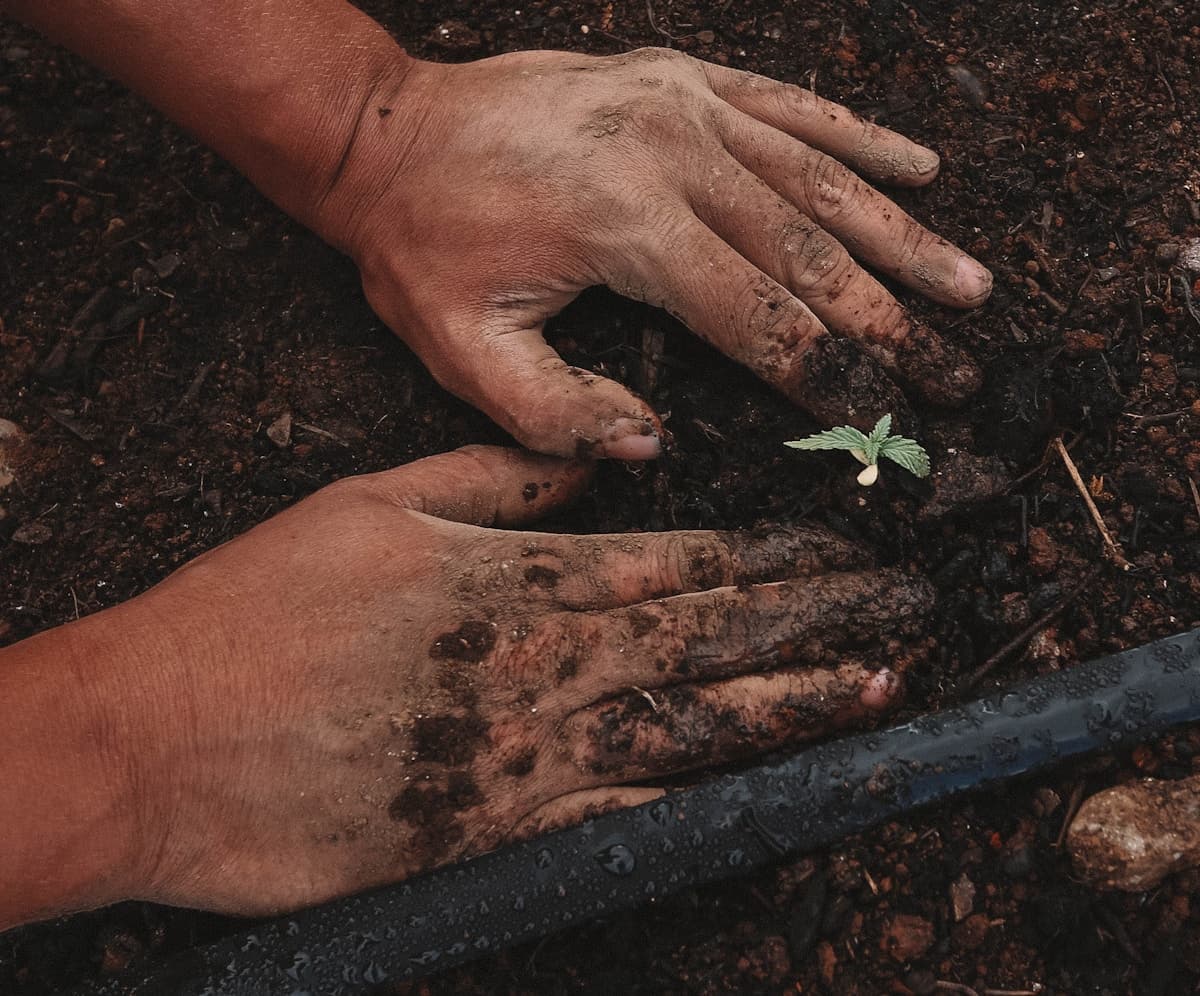
I killed my first basil plant with garden soil from the backyard. It seemed so logical at the time — soil is soil, right? I filled a pretty ceramic pot with dense clay from behind the garage, tucked in a healthy-looking basil seedling from the farmers market, and waited for pesto season. Within two weeks the leaves yellowed. Within three, the stem turned black at the base and the whole plant collapsed into a sad, fragrant heap. The soil had compacted into something resembling dried cement, water sat on top instead of draining through, and the roots had suffocated.
That failure taught me the central truth of container gardening: plants in pots live in an entirely different world than plants in the ground. In a garden bed, roots can stretch deep for water, soil organisms break down organic matter, and excess moisture drains away through layers of earth. In a container, roots are trapped, drainage is limited to one small hole, and the soil you choose is the entire universe your plant inhabits. Get the soil and water wrong and nothing else matters. Here is what actually works, after years of experiments, dead plants, and eventually, thriving ones.
The Soil Mix That Actually Works
Garden soil has no business being in a container. It is too dense, too heavy, and too full of surprises — weed seeds, insect eggs, fungal spores, and unpredictable pH. Potting mix, sometimes called container mix or soilless mix, is specifically engineered for life in a pot. It is light, fluffy, and designed to drain quickly while still holding enough moisture for roots to access.
A good potting mix contains three main ingredients. Peat moss or coconut coir provides the base structure and water retention. Coconut coir is the more sustainable choice — it is a byproduct of coconut harvesting, pH neutral, and resists compaction better than peat. Perlite or vermiculite adds air pockets that keep the mix from becoming a solid mass. These white, popcorn-looking bits are volcanic minerals that have been heated until they expand into lightweight, porous granules. They do not add nutrition, but they keep roots breathing. Compost or aged bark contributes organic matter and a slow-release supply of nutrients.
The mix you buy matters. Cheap potting soil is often just peat and sand, with none of the structure that roots need. It compacts after a few waterings and turns into a soggy brick. Look for a bag that lists perlite, compost, and either peat or coir among the first ingredients. Avoid anything labeled topsoil or garden soil — those words in a container context are warning signs. If the bag feels heavy and dense, put it back. Good potting mix should feel almost fluffy in the bag.
For plants that need exceptional drainage — succulents, cacti, lavender, and rosemary — you can amend standard potting mix with extra perlite or coarse sand. A fifty-fifty blend of potting mix and perlite creates the fast-draining environment these plants evolved for. For moisture-loving plants like ferns and tropical foliage, add a handful of coco coir or peat to standard mix to increase water retention. The key is matching the soil to the plant's natural preferences, not just using whatever bag is cheapest.
One more note on soil depth: shallow pots need different considerations than deep ones. In a shallow container, standard potting mix can still hold too much moisture near the surface because there is not enough depth for water to disperse. For shallow pots under six inches deep, use a cactus and succulent mix even for non-succulents, or add extra perlite to standard mix. The reduced water retention prevents the surface from staying constantly damp.
Drainage Myths and the Truth About Water
Let us talk about the gravel myth, because it refuses to die. Somewhere in the collective gardening consciousness, the idea took hold that putting rocks or broken pottery in the bottom of a pot improves drainage. It does not. In fact, it makes drainage worse. Soil scientists have known this for decades, but the advice persists in gardening books, nursery tags, and well-meaning Facebook groups.
Here is what actually happens. Water does not move easily from fine-textured soil into coarse-textured gravel. Instead, it sits in a saturated layer right above the gravel — what soil scientists call a perched water table. The gravel does not help water escape; it creates a barrier that keeps the bottom layer of soil wetter than the rest of the pot. Your plant's roots end up sitting in soggy soil exactly where you thought you were helping them stay dry. If your pot has a drainage hole, you do not need gravel. If it does not have a drainage hole, no amount of gravel will fix the problem.
The only thing that belongs in the bottom of a pot is a small piece of broken terracotta or a mesh screen over the drainage hole to prevent soil from washing out. That is it. No rocks, no shards, no elaborate layering systems. Just good potting mix from top to bottom, and a clear path for water to exit through the hole.
Watering technique matters as much as soil choice. The soak-and-drain method is the gold standard for container plants. Water slowly and thoroughly until you see water flowing out of the drainage hole. This ensures the entire root ball gets moisture, not just the surface. Then let the top inch or two of soil dry before watering again. The exact timing depends on your climate, the season, the size of the pot, and what you are growing, but the finger test never fails: stick your finger into the soil up to the second knuckle. If it feels dry, water. If it feels damp, wait.
Morning is the best time to water. Plants take up water most actively during daylight hours, and wet foliage has time to dry before evening, which reduces the risk of fungal diseases. Evening watering is better than midday watering in hot climates — midday water can scorch leaves and much of it evaporates before roots can absorb it — but morning is ideal. If you can only water once a day, make it early.
Self-watering containers are worth considering if you travel frequently or tend to forget watering. They work through capillary action: a reservoir at the base holds water, and a wick or porous platform draws moisture up into the soil as needed. The soil stays consistently damp but not soggy. The downside is that they are less forgiving of over-fertilizing, since salts accumulate more readily in the reservoir. If you use self-watering pots, flush the soil thoroughly with plain water every few weeks to wash away built-up salts.
Fertilizer and Seasonal Adjustments
Container plants are entirely dependent on you for nutrients. In a garden bed, roots can explore a vast area, tapping into reserves of minerals and organic matter. In a pot, the plant eats what you give it, and when the potting mix runs low on nutrients, the plant has nowhere else to go. Most commercial potting mixes contain enough nutrition for six to eight weeks. After that, you need to feed your plants.
For beginners, a balanced liquid fertilizer diluted to half the strength on the label is the safest approach. Apply it every two weeks during the growing season — roughly from the last frost in spring to the first frost in fall. Half-strength feeding is gentler on roots and far less likely to cause fertilizer burn, which shows up as brown leaf tips and crusty salt deposits on the soil surface. You can always increase the concentration later if your plants seem hungry, but you cannot undo burned roots.
Slow-release granular fertilizers are another option. You sprinkle them on the soil surface at the start of the season, and they dissolve gradually over three to four months. They are convenient and reduce the risk of over-fertilizing, but they are less flexible than liquid feeds. If a plant shows signs of nutrient deficiency mid-season, you cannot easily boost the dose with slow-release granules. Many experienced container gardeners use a combination: slow-release as a baseline, with occasional liquid feeds for heavy feeders like tomatoes and peppers.
Organic options like fish emulsion, seaweed extract, and compost tea work beautifully in containers and are harder to overapply than synthetic fertilizers. They smell, though. Fish emulsion in particular has a distinct aroma that lingers for a day or two. I use it on my balcony garden where the breeze carries the smell away, but I would not recommend it for a small enclosed apartment unless you really like the scent of low tide.
Seasonal adjustments are crucial. In winter, most container plants enter a dormant or slow-growth phase and need little to no fertilizer. Feeding a dormant plant forces weak, leggy growth that is vulnerable to pests and disease. Cut back to once a month in fall, stop entirely in winter, and resume full feeding in spring when new growth appears. Watering also drops in winter — evaporation is slower, plants are less active, and soggy cold soil is a recipe for root rot. In the depth of winter, I water my indoor containers roughly half as often as I do in summer.
Container gardening is not complicated, but it is precise. The soil needs to breathe. The water needs to move through, not sit. The fertilizer needs to arrive regularly but gently. Get these three things right and you have solved ninety percent of container gardening problems. The other ten percent is observation — paying attention to your plants, adjusting as seasons change, and learning from the inevitable mistakes. Every dead plant is data. Every thriving one is proof that you are figuring it out.
Buying Guide: Soil and Watering Essentials
Invest in quality potting mix, not garden soil. Bagged potting mix costs $8 to $15 per cubic foot and is formulated specifically for containers. Garden soil is too dense, compacts in pots, and often harbors pests and weed seeds. Look for mixes containing peat moss or coconut coir for moisture retention, perlite or vermiculite for aeration, and compost for nutrients. Organic mixes cost more but feed plants longer and improve soil biology over time.
Care & Maintenance
Refresh container soil annually. After a full growing season, potting mix breaks down and loses structure. Remove the top two inches and replace with fresh mix, or repot entirely every two to three years. Flush salts from the soil monthly by watering until water runs freely from the drainage holes. This prevents fertilizer salt buildup that burns roots. Clean saucers weekly to prevent mosquito breeding and fungal growth.
Common Mistakes Beginners Make
The biggest mistake is using garden soil in containers. It seems economical but leads to compaction, poor drainage, and root suffocation. Another error is underwatering on hot days. Container soil can dry out completely in a single afternoon during a heatwave. Check moisture daily in summer. Beginners also tend to over-fertilize, thinking more nutrients equals bigger plants. Excess fertilizer burns roots and causes leaf tip dieback.
Frequently Asked Questions
Q: How often should I replace container soil? A: Completely replace it every two to three years. Refresh the top layer annually for perennials and long-lived plants.
Q: Can I reuse old potting mix? A: Yes, but mix it with fresh compost and perlite to restore structure and nutrients. Never reuse soil from a plant that died of disease.
Q: Why does my container soil dry out so fast? A: Small pots dry out faster than large ones. Terracotta wicks moisture away. Increase pot size, use mulch on the soil surface, or switch to a less porous material.
Q: Should I water from the top or bottom? A: Top watering is fine for most plants. Bottom watering works well for seedlings and plants prone to fungal issues on their leaves. Use the method that best suits your specific plants.
Seasonal Adjustments
Watering needs change dramatically with the seasons. In spring, plants are establishing roots and need consistent moisture. In summer, containers may need watering twice daily during heatwaves. In fall, reduce watering as growth slows. In winter, most outdoor containers need minimal water, and indoor plants need less frequent watering due to lower light and evaporation rates. Adjust your schedule monthly rather than keeping it static year-round.
James Brioche
Columnist